October 27, 2026
By JP Landscaping & Masonry LLC
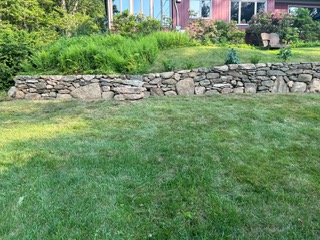
Stone walls are one of the most defining features of the Connecticut landscape. You see them lining properties, holding back slopes, and marking the edges of old farm fields all over western Connecticut. They are built to last, but they are not maintenance-free, and they do not last forever without attention. This guide explains the difference between the walls you see, why they shift in our climate, the signs that a wall needs repair, and how to think about planning a new one.
Not every stone wall does the same job. A retaining wall holds back soil and manages a change in elevation, so it carries real structural load. It needs a proper base, drainage behind it, and the right construction to resist the pressure of the earth it is holding. A decorative, freestanding wall defines a space or adds character but does not hold back a slope. Both can be beautiful, but a retaining wall is an engineering project as much as an aesthetic one. Confusing the two is one of the most common reasons a wall fails, because a wall built only to look good will not hold up when it is actually holding back earth. A proper stone wall installation and repair starts by understanding which kind of wall the project actually needs.
In Connecticut, the freeze-thaw cycle is the main force working against any wall. Water gets into the soil behind a wall and into small gaps in the stone. When it freezes, it expands, and when it thaws, the ground shifts. Over many seasons, that movement pushes walls forward, opens joints, and settles the base. Poor drainage makes this much worse, because water that cannot escape builds up pressure behind the wall. Settling of the base, tree roots, and simple age all contribute. None of this means a wall was built badly; it means the wall is reacting to the ground it sits on. Good construction accounts for it with proper drainage and base preparation, but even well-built walls can move over time.
It is usually obvious when a wall is in trouble, but the signs are easy to dismiss until they get serious. Walk the length of the wall and look for these:
A small shift caught early is often a straightforward repair. A wall that has leaned significantly or bulged may need a rebuild of that section. The earlier you look at it, the more options you usually have.
Repair makes sense when the damage is localized, the wall is otherwise sound, and the base and drainage are still doing their job. Rebuilding a section or the whole wall becomes the better option when the movement is widespread, the drainage has failed, or the original construction was not adequate for the load. The decision depends on what the wall is doing, how far it has moved, and what is behind it. This is exactly the kind of thing to have looked at rather than guess about, because a retaining wall that fails can take soil, plantings, and sometimes a nearby walkway or patio with it.
A new wall starts with what it needs to do. Is it holding back a slope, defining a property line, or framing a garden? The answer drives the height, the base, the drainage, and the stone. From there, the style of stone and the way it is laid should complement the house and the rest of the landscape. Good stonework matches the character of the property, and pairing the wall with a landscape design plan keeps it from looking like an afterthought. If the wall connects to a path or seating area, coordinating the walkways and any nearby patios at the same time gives you a cohesive result.
A stone wall rarely exists on its own. It usually sits next to a lawn, a bed, a walkway, or a patio, and the best results come from planning those together. A wall that frames a planting bed looks better when the bed is edged and mulched to match. A retaining wall beside a walkway needs the walkway to drain away from the wall, not toward it. Thinking about the whole area, not just the wall, is what separates a project that looks intentional from one that feels pieced together.
For homeowners in New Milford, Kent, Washington, and Sherman considering a new wall or a repair, free estimates are available and new customers receive 10% off.
Have a stone wall that needs attention? Request a free estimate and new customers save 10%.
Free estimates are available, and new customers receive 10% off. Give us a call or request an estimate today.